
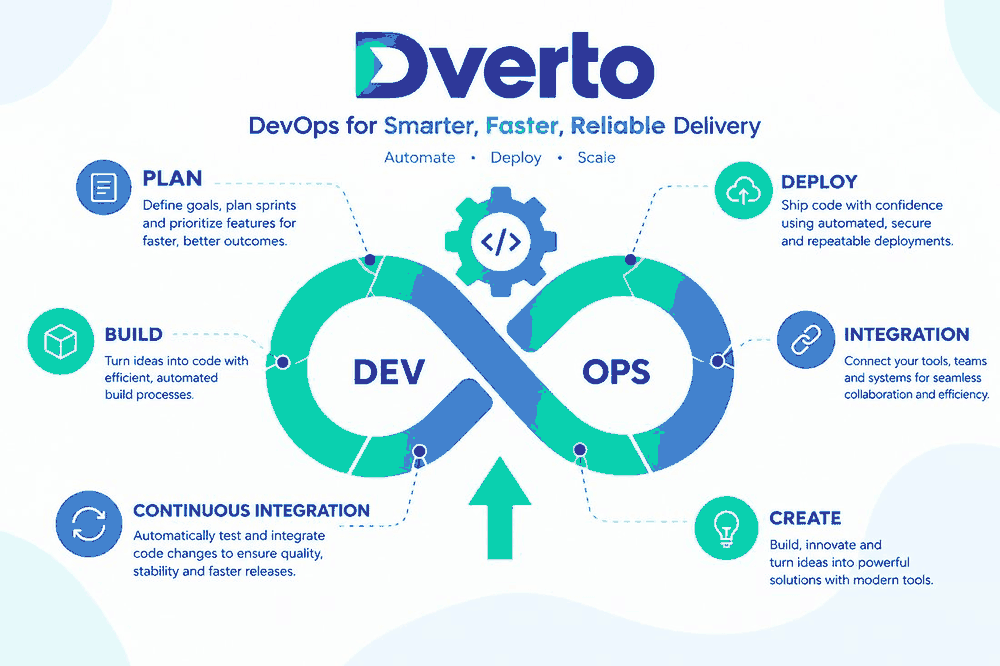
Software development is not just about building an application.Businesses put lots of effort into it. They need to test it, launch it, maintain it, and keep it running smoothly. This is where DevOps comes in.
DevOps helps development and IT operations teams work together to deliver software faster, reduce errors, and improve reliability. By combining teamwork, automation, and continuous monitoring, businesses can manage software more efficiently and respond to customer needs quickly.
What Is DevOps?
DevOps comes from two words: Development (Dev) and Operations (Ops). It is to help software developers and IT teams collaborate and work more efficiently throughout the software delivery process.
Traditionally, developers build software, while operations teams manage its deployment and performance. When these teams work separately, delays and communication problems can occur.
DevOps reduces these problems by encouraging collaboration, shared responsibility, and automation throughout the software development process.
For businesses, this means faster updates, fewer deployment issues, and a more reliable experience for users.
How Does DevOps Work?
DevOps uses a series of connected practices to make software development and delivery smoother.
1. Continuous Integration (CI)
Continuous Integration means regularly combining code changes into a shared project. Automated tests check these changes to identify problems early.
This helps developers fix errors before they become bigger issues.
2. Continuous Delivery and Deployment (CD)
Continuous Delivery prepares software updates for release through an automated process. DevOps take continuous deployment a step further by automatically releasing changes that pass the required checks.
Both approaches help teams deliver updates more consistently with less error, and reduce manual work.
3. Infrastructure as Code (IaC)
Infrastructure as Code allows teams to manage servers, networks, and other technology resources through configuration files instead of setting everything up manually.
This makes environments easier to repeat, manage, and scale as business needs change.
4. Monitoring and Feedback
Monitoring tools track application performance, system health, and errors. Teams receive alerts when something goes wrong and can investigate problems before they seriously affect users.
Regular feedback also helps teams improve software quality over time.
Key Benefits of DevOps for Businesses
DevOps offers several advantages when implemented with the right processes and tools.
Faster software delivery: Automation helps teams release updates more quickly.
Better software quality: Frequent testing helps identify problems early.
Fewer manual errors: Automated workflows reduce repetitive tasks and mistakes.
Improved collaboration: Developers, operations teams, and other stakeholders work toward shared goals.
Greater scalability: Well-managed infrastructure makes it easier to handle growing workloads.
More reliable applications: Monitoring and recovery practices help teams respond to technical problems.
These benefits allow businesses to spend less time managing delivery problems and more time improving their products and services.
Why Are DevOps and Cloud Computing Important Together?
Cloud computing gives businesses access to computing resources such as servers, storage, and databases without having to manage all the physical infrastructure themselves.
DevOps practices help teams use these resources more efficiently through automation, repeatable deployments, and continuous monitoring.
For example, a growing online business may need to release new features frequently while handling increasing website traffic. Cloud infrastructure provides flexibility, while DevOps practices help the team test, deploy, and monitor updates consistently.
Businesses can explore Dverto AI's cloud services to learn about cloud migration, DevOps, CI/CD pipelines, infrastructure management, and reliability-focused operations.
DevOps Best Practices to Follow
To get the most out of DevOps, businesses should focus on a few important practices:
Automate repetitive tasks wherever practical.
Test code regularly instead of waiting until the end.
Use version control to track changes and support collaboration.
Monitor applications and infrastructure continuously.
Follow security practices throughout development and deployment.
Review failures without blaming individuals and use the lessons to improve processes.
DevOps is not simply about adopting new tools. It also requires a culture of learning, communication, and continuous improvement.
How Can Businesses Get Started with DevOps?
Businesses do not need to change every process at once. They can begin by identifying delays in their existing software delivery workflow.
Start with version control, introduce automated testing, and create a basic CI/CD pipeline. Next, add monitoring and improve infrastructure management as the team becomes more comfortable with automation.
Working with an experienced technology partner can also help businesses choose suitable tools and build a practical implementation plan.
Learn more about Dverto AI's technology services to explore software development, cloud solutions, and automation capabilities that can support your digital projects.
Conclusion
DevOps helps businesses improve the way they build, test, deploy, and maintain software. By bringing teams together and using automation, monitoring, and continuous feedback, organizations can reduce delays, improve reliability, and deliver better digital experiences.
As business needs continue to change, adopting the right DevOps practices can help technology teams become more efficient, flexible, and prepared for future growth.
Related Blogs
More in devops
No related blogs found in this category yet.