
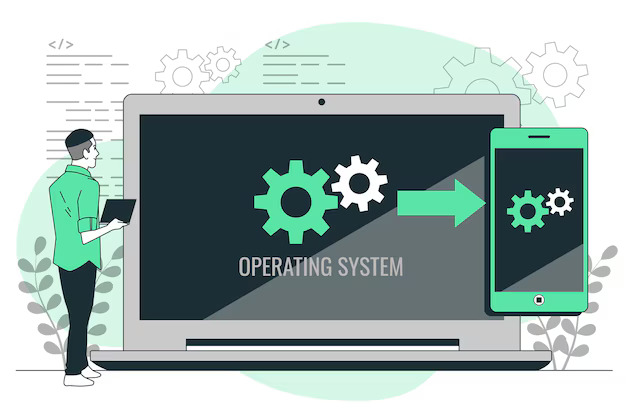
An operating system (OS) is the fundamental software that enables a computer to function by acting as a bridge between hardware and users. It controls how applications interact with physical components such as the CPU, memory, storage, and input/output devices, ensuring that the system runs efficiently, securely, and reliably. Without an operating system, hardware would be incapable of performing meaningful tasks for users or applications.
One of the primary roles of an operating system is process management. It handles the creation, scheduling, and execution of processes, allowing multiple programs to run simultaneously. By using techniques like multitasking and context switching, the OS ensures fair CPU allocation and maintains system responsiveness even under heavy workloads.
Memory management is another critical responsibility of the operating system. It allocates memory to running programs, keeps track of memory usage, and prevents processes from interfering with each other. Through mechanisms such as virtual memory, paging, and swapping, the OS allows systems to run applications that require more memory than what is physically available.
The operating system also manages files and storage through a structured file system. It organizes data into files and directories, controls access permissions, and ensures data integrity. By abstracting the complexity of physical storage devices, the OS makes data storage and retrieval simple and reliable for both users and applications.
Device and input/output management is handled by the operating system using device drivers and standardized interfaces. This allows software to communicate with hardware components like keyboards, printers, disks, and network cards without needing to understand their internal workings. The OS efficiently manages interrupts, buffering, and I/O scheduling to maintain smooth system performance.
Security and access control are essential functions of an operating system. It authenticates users, enforces permissions, isolates processes, and protects system resources from unauthorized access. These security mechanisms help maintain data confidentiality, system stability, and trust in multi-user environments.
When a computer starts, the operating system is loaded through a structured boot process. Firmware initializes the hardware and loads the operating system kernel into memory. The kernel then initializes system services and prepares the environment for user interaction, enabling applications to run smoothly.
In summary, the operating system is the backbone of modern computing. By efficiently managing hardware resources, coordinating software execution, and enforcing security, it makes computers usable, reliable, and powerful. Understanding operating system basics provides a clear view of how computers really work and forms a strong foundation for advanced studies in computer science and software engineering.
Related Blogs
More in operating systems
No related blogs found in this category yet.