
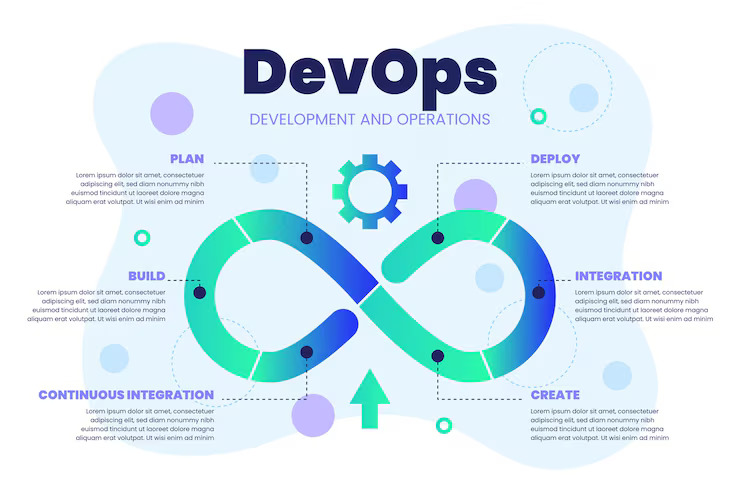
DevOps is a comprehensive approach that combines cultural philosophies, practices, and tools to unify software development (Dev) and IT operations (Ops). Its primary goal is to enhance collaboration between development, operations, and other stakeholders, enabling organizations to deliver software faster, more reliably, and with higher quality. By breaking down traditional silos, DevOps promotes a culture of shared responsibility, continuous improvement, and alignment with business objectives.
At the heart of DevOps are Continuous Integration (CI) and Continuous Delivery (CD) practices. Continuous Integration involves frequently merging code changes into a shared repository, where automated tests validate the updates, ensuring early detection of defects. Continuous Delivery extends this by automating the deployment pipeline, allowing teams to release software to production or staging environments quickly, safely, and consistently. Automation reduces manual errors, accelerates release cycles, and provides faster feedback loops.
DevOps also emphasizes infrastructure as code (IaC), where infrastructure configuration is defined and managed using code. This approach ensures consistency across environments, simplifies scaling, and allows rapid provisioning of resources. Monitoring, logging, and alerting systems are integral to DevOps, providing real-time visibility into application performance, system health, and user behavior, helping teams respond proactively to issues.
Cultural transformation is equally important in DevOps. Teams are encouraged to adopt a mindset of experimentation, continuous learning, and resilience. Collaboration between developers, operations, QA, and security teams fosters transparency, reduces bottlenecks, and aligns efforts toward delivering value to end-users. Practices such as blameless postmortems, feedback loops, and performance metrics reinforce accountability while promoting a learning culture.
Beyond faster delivery, DevOps enables higher software quality, reduced downtime, and improved customer satisfaction. Organizations that embrace DevOps can deploy changes multiple times a day with confidence, recover quickly from failures, and innovate continuously. By integrating processes, automation, and culture, DevOps transforms software delivery from a fragmented, error-prone activity into a predictable, efficient, and resilient system.
In conclusion, DevOps is not just a set of tools but a holistic approach that combines people, processes, and technology to improve software delivery. Its focus on automation, collaboration, continuous improvement, and monitoring allows organizations to respond rapidly to changing market demands while maintaining high quality, reliability, and user satisfaction. Embracing DevOps is essential for businesses aiming to stay competitive in today’s fast-paced technology landscape.
Related Blogs
More in devops
No related blogs found in this category yet.